Service area
Water treatment in Hudson, Ohio: four suppliers, one free water test
Depending on your street, Hudson water can come from one of four public suppliers. Here’s a calm local guide to spots, scale, and taste before you buy equipment.
7 min read
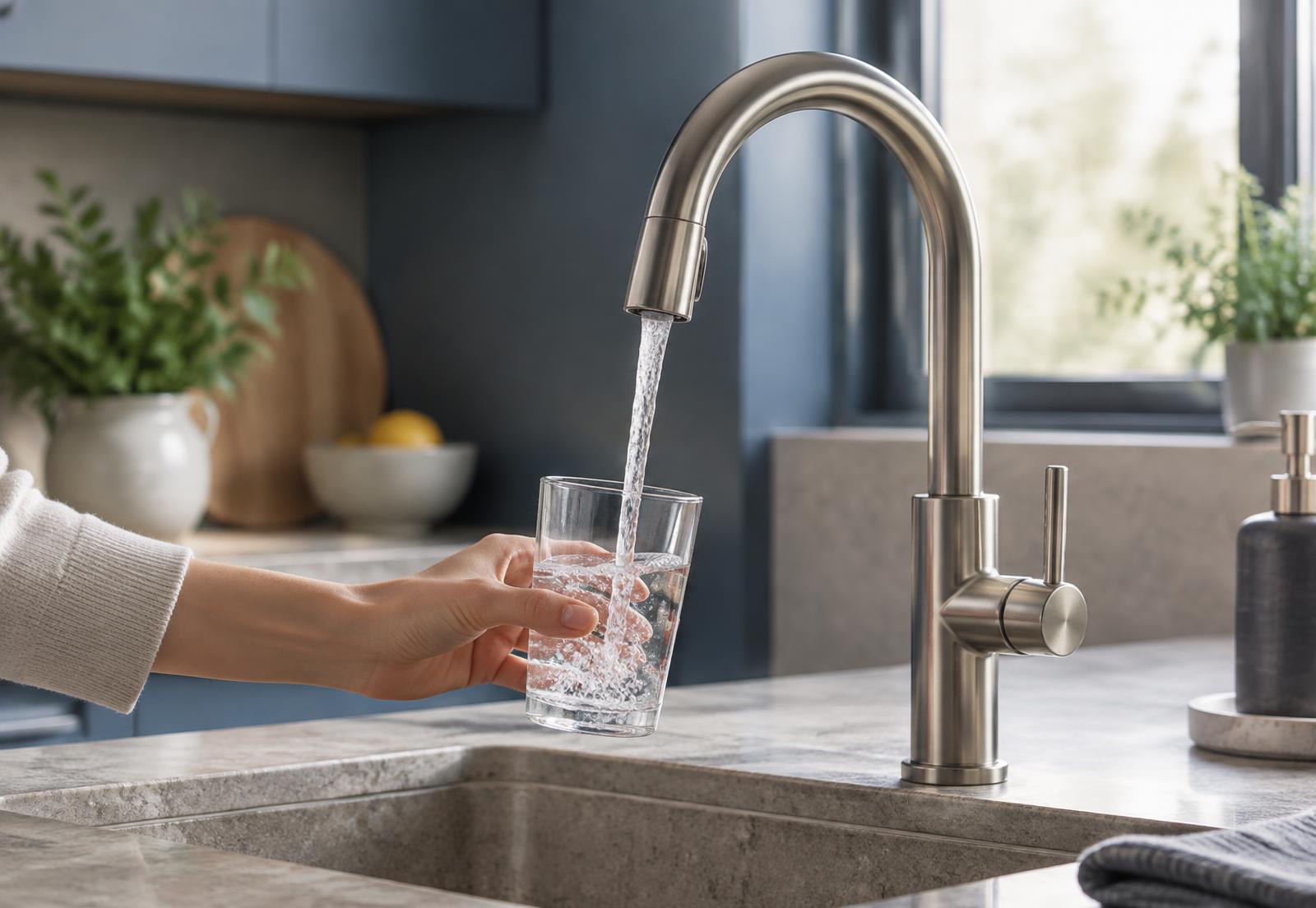
Why Hudson water isn’t one story
Hudson sits in Summit County, at the eastern edge of the area Softstone Water serves from Strongsville across Cuyahoga, Medina, Lorain, and Summit counties. Most towns we visit have one main public supplier. Hudson is different. Depending on the street, a home may receive water from Hudson’s own system, Akron Water, Cleveland Water, or Stow Water. The city publishes a map and guidance on its water page so residents can identify which provider serves their address.
That detail matters more than any citywide average. Two neighbors a few miles apart can have different sources, different hardness at the tap, and a different taste in the glass. None of that is a reason for alarm. It simply means the honest starting point for Hudson water treatment is one question: who supplies your home?
The four suppliers, in plain terms
Hudson’s own municipal system serves central parts of the city and draws from groundwater. The city also softens that supply at the municipal level, which surprises homeowners who assume city softening means they will never see spots. Other parts of Hudson are served by Akron Water, whose supply comes from the Lake Rockwell and Upper Cuyahoga reservoir system; by Cleveland Water, which treats Lake Erie surface water; or by Stow Water.
Each utility publishes its own annual water-quality report. Those reports describe the public system and how it is managed. They are useful background, and Softstone reviews them before a visit. They are not a measurement of what comes out of your kitchen faucet after the water travels through the distribution network and your home’s plumbing. The fastest way to know your supplier is your water bill.
Everyday signs Hudson homeowners mention
The comments we hear in Hudson are familiar ones. White spots on glassware after the dishwasher. Chalky film on shower doors and chrome. Kettles and coffee makers that need descaling more often. Soap and shampoo that take extra product to lather. Some homeowners also notice a disinfectant taste or smell at the kitchen sink or in the shower, and that taste can vary by supplier.
These are comfort and upkeep issues, and they come from two different places. Hardness minerals drive scale, spotting, and soap feel. Disinfectant taste and odor are a separate lane. Treating them as one vague problem makes shopping confusing, so Softstone keeps them apart from the first conversation.
Start with your water, not a sales tier.
A free at-the-tap test helps separate hardness, taste, odor, and installation questions before you choose equipment.
What the free test includesMunicipal softening and why spots can remain
If your home is on Hudson’s own system, you may wonder why anyone would add a softener to water the city already softens. It’s a fair question. Municipal softening can reduce hardness across a whole system without bringing it down to the level where every home stops seeing spots or scale. Whether more softening is useful depends on the number at your tap and what you notice day to day.
For homes on Akron, Cleveland, or Stow water, hardness and taste can look different again. That’s why Softstone doesn’t assume a hardness setting or a recommendation from a Hudson ZIP code. We measure first, then explain what a softener would change and what it would not. A softener does not remove chlorine taste, and it is not the same as reverse osmosis for drinking water.
How Softstone’s package fits Hudson homes
For a typical public-water home, Softstone’s published package is $3,599 all-in installed. It includes a whole-home softener, whole-home carbon filtration, and under-sink reverse osmosis at the kitchen sink, plus standard installation by licensed plumbers, startup, a starter bag of salt, and the first RO filter set. Softstone sells the system and coordinates the job; licensed plumbers perform the installation.
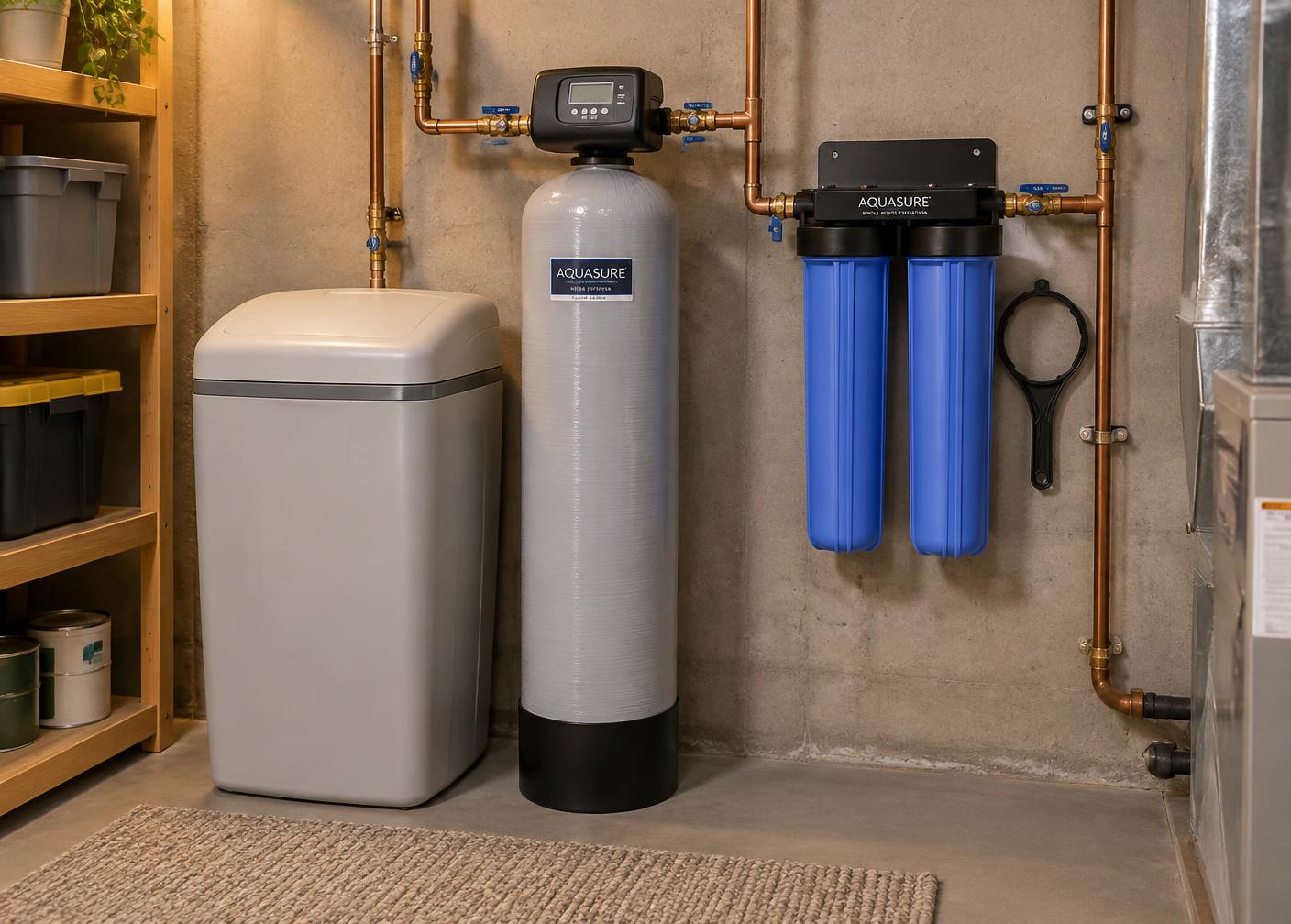
In Hudson, the package can fit homes across all four supplier areas, but the details should follow your actual water. The softener’s hardness setting reflects your tap result, not a city average. Carbon handles disinfectant taste and odor where that is a concern. Kitchen RO gives you a dedicated tap for the water you drink and cook with most. Equipment usually lands in a basement or utility space, and the startup walkthrough covers salt, filter changes, and what normal operation looks like.
What happens at a free water test in Hudson
Before you buy anything, schedule Softstone’s free in-home water test. It usually takes about 30 to 45 minutes. We confirm your supplier, ideally from a recent water bill, test hardness at the tap, and ask what you’ve noticed with spots, scale, soap, and taste. We also look at where equipment would sit so there are no surprises later.
Then we compare your result with that supplier’s public report and walk you through what fits. There’s no pressure pitch and no kitchen-table performance. If the standard package makes sense, you’ll see exactly what’s included. If it doesn’t, we’ll say so plainly.
A clear next step for Hudson and Summit County
If you live in Hudson or a nearby Summit County community and you’re seeing scale, spots, weak lather, or a taste you don’t love, start with understanding rather than guesswork. Softstone also has a Hudson service-area page that explains the four-supplier picture and how we approach each one.
Call (330) 304-1001, use chat on the site, or reach out through the contact page to book a free water test. Online booking isn’t live yet, so phone, chat, or the contact form are the ways to schedule for now. Have a recent water bill handy if you can. It’s the quickest way to tell us which Hudson supplier serves your home.
Continue exploring
Ready for a clear answer about your water?
Book a free in-home water test. We will explain what we find, answer your questions, and let you decide.