Troubleshooting
Why your dishwasher still leaves spots after you add rinse aid
Rinse aid is filled, the cycle is normal, and the glasses still come out cloudy. Here's how to tell what you're actually looking at, what to adjust first, and when the water itself is the real issue.
6 min read
Rinse aid changes how water leaves the glass, not what's in it
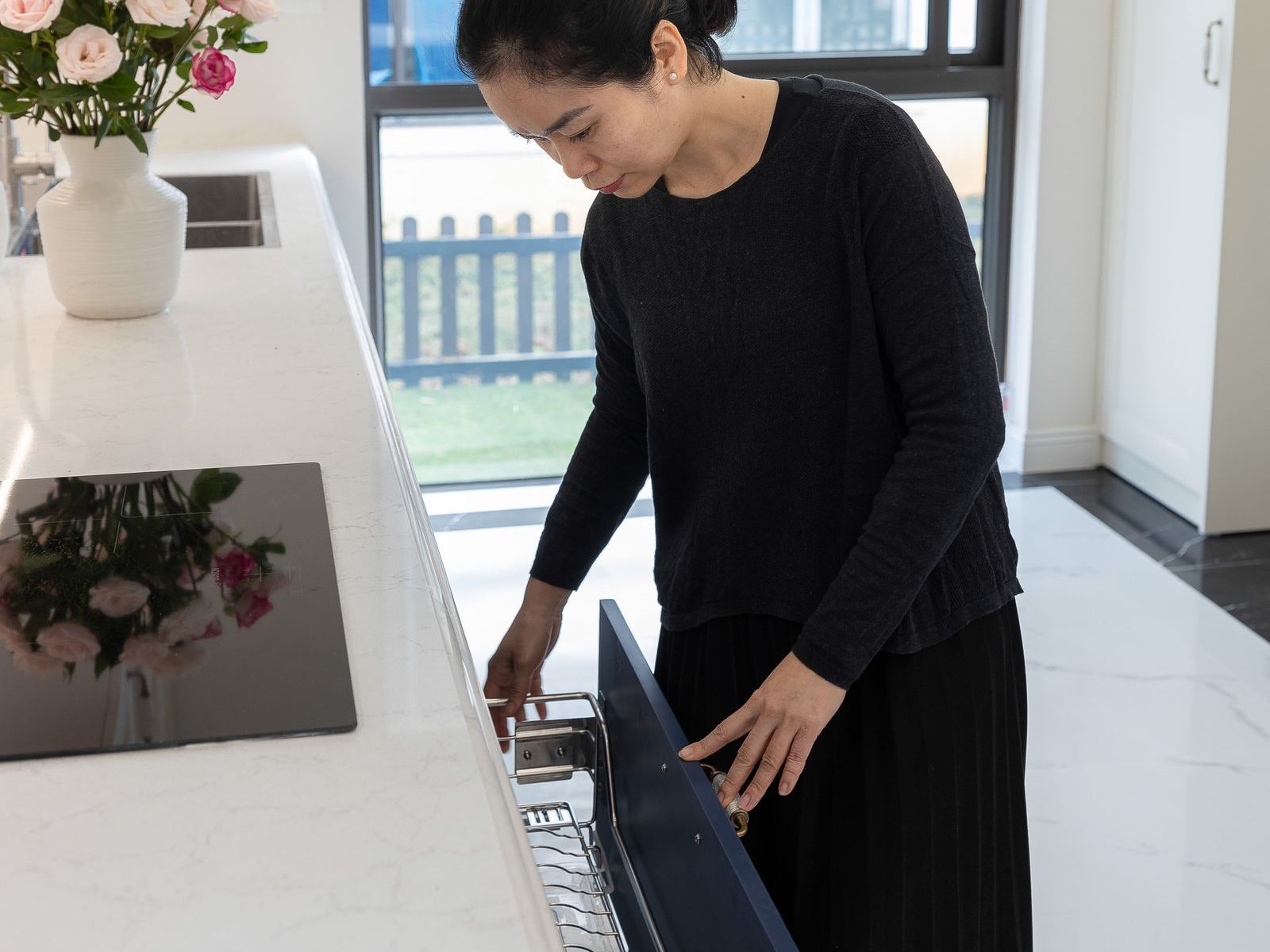
Rinse aid is a surface-tension trick. A small dose goes into the final rinse so water sheets off glasses and silverware instead of sitting in droplets. KitchenAid's support pages describe it exactly that way: it helps water run off, speeds drying, and limits spotting on glass and stainless steel.
What it can't do is take calcium and magnesium out of the water. When a droplet that carries dissolved minerals dries on a glass, the minerals stay behind. The U.S. Geological Survey calls the spots and film on dishwasher glasses hard-water residue: not dangerous, just unsightly. Rinse aid leaves fewer droplets to dry, so it often helps. On harder water, though, the droplets that are left can still leave a mark.
So if you're still seeing spots with a full rinse-aid dispenser, don't just buy another bottle. First work out what kind of haze you have, because the fix for one kind can make the other worse.
First, figure out whether it's film or etching
Cloudy glassware usually comes from one of two very different things. Film is a layer of mineral or detergent residue sitting on the surface. Etching is permanent wear on the glass itself: a dull, slightly rough haze that some glassware makers say can show faint rainbow tints when you tilt it toward the light.
Whirlpool, Maytag, and Haier all suggest the same quick check. Dampen a cloth with plain white vinegar and rub part of a cloudy glass, or soak the glass in vinegar for about 15 minutes, then hand-wash it. If the cloudiness lifts, it was removable mineral film. If the glass stays foggy, it's most likely etching, and no cleaner will bring it back.
This is just a way to tell the two apart, not a water test. It tells you what is on the glass. It doesn't tell you how hard your water is.
If it wiped off: check the machine before you blame the water
Dishwasher makers list several causes for spots and film besides water hardness. Most of them are free to check, so start there. Make one change at a time and run a normal load between changes so you can tell what made the difference.
Rinse aid setting. Most dishwashers let you change how much rinse aid each cycle uses. Sub-Zero's Cove support page says that in hard-water areas you should raise it one level at a time and judge the result after each load. Also make sure the dispenser cap is closed tightly.
Cycle choice. Quick and rinse-only cycles run cooler and shorter. Cove's troubleshooting guide lists low-temperature cycles as a cause of spotting, so try a normal cycle before you decide anything is wrong.
Detergent amount. Too much detergent can leave its own white film. Samsung and Haier both suggest cutting back if residue shows up. More soap isn't the answer to cloudy glasses.
Loading and pre-rinsing. Crowded racks keep water from reaching every surface and draining off cleanly. Cove also notes that heavily pre-rinsed dishes can leave detergent with nothing to work on, so scraping off food without a full rinse is usually enough.
A built-in softener, if your model has one. Some dishwashers have a small internal softener that uses dishwasher salt and a hardness setting you choose. If yours has a salt compartment, check that it's filled and the hardness setting matches your water. Your owner's manual will say whether your model has one.
Start with your water, not a sales tier.
A free at-the-tap test helps separate hardness, taste, odor, and installation questions before you choose equipment.
What the free test includesWhen the water itself is the cause
If you've adjusted the settings and the film keeps coming back within a few loads, the minerals in your water are the likely cause. The USGS classifies water at 0 to 60 mg/L of hardness (as calcium carbonate) as soft, 61 to 120 as moderately hard, 121 to 180 as hard, and more than 180 as very hard. Dishwasher manuals and softener dealers often use grains per gallon instead. One grain per gallon is about 17.1 mg/L.
Some appliance makers set limits of their own. One Whirlpool dishwasher support page lists an operating range below 15 grains per gallon for that model and suggests testing the water and softening it if it's above that.
Where your water comes from matters. If you're on public water in Strongsville or elsewhere in Cuyahoga, Medina, Lorain, or Summit County, your utility's annual water quality report often lists hardness, though it can change with the source and the season. On a private well, nobody else is measuring it for you, and the reading can differ from your neighbor's. Either way, the USGS notes that regional maps aren't meant for decisions about a single house. That number comes from testing your own water.
What changes after a softener, and the adjustment people forget
A whole-home softener removes the hardness minerals before water reaches the dishwasher, the faucets, and the water heater. That targets the mineral film the vinegar check identified. It won't fix a dishwasher that's overloaded, running on a quick cycle, or getting too much detergent, so the settings above still matter.
Here's the part people forget. Softened water needs less detergent and usually less rinse aid. Whirlpool and Maytag both link etching to soft water combined with too much detergent and hot, long cycles, and Cove's guide says too much rinse aid with soft water leaves its own residue in the tub. After water is softened, it's sensible to cut back on detergent and lower the rinse-aid setting rather than keep the doses you used on hard water.
Etching that has already happened is permanent. A softener won't undo it, and nobody should promise you otherwise.
If you'd rather have a number than keep guessing
If you've ruled out the machine and still aren't sure about the water, a hardness reading settles it. Softstone's free in-home water test takes about 30 to 45 minutes. We test hardness and the basics at your tap, and on wells we look more widely and recommend a certified lab when the results call for it. You get the numbers and a straight answer about whether treatment makes sense, with no obligation to buy.
If treatment does make sense, Softstone has one published package: a water softener, whole-home carbon filtration, and an under-sink reverse osmosis system for $3,599 installed. To set up a test, call or text (330) 304-1001, or use the free water test page.
Sources
- USGS Water Science School: Hardness of Water
- KitchenAid: Frequently asked questions about using rinse aid
- Whirlpool: Etching or cloudy glassware
- Maytag: How to clean cloudy glasses from the dishwasher
- Sub-Zero, Wolf, and Cove: Dishwasher water spots or white film
- Sub-Zero, Wolf, and Cove: Rinse aid dosing setting
- Libbey: Restoring shine to cloudy or etched glassware
- Haier: Glasses are cloudy after washing in dishwasher
Continue exploring
Ready for a clear answer about your water?
Book a free in-home water test. We will explain what we find, answer your questions, and let you decide.