Troubleshooting
Why your water heater pops and rumbles, and what hard water has to do with it
A sound-by-sound guide to a noisy tank water heater: what usually causes each noise, what manufacturers recommend, when to call a plumber, and what a softener can and can't change.
6 min read
Most of the noise has an ordinary explanation
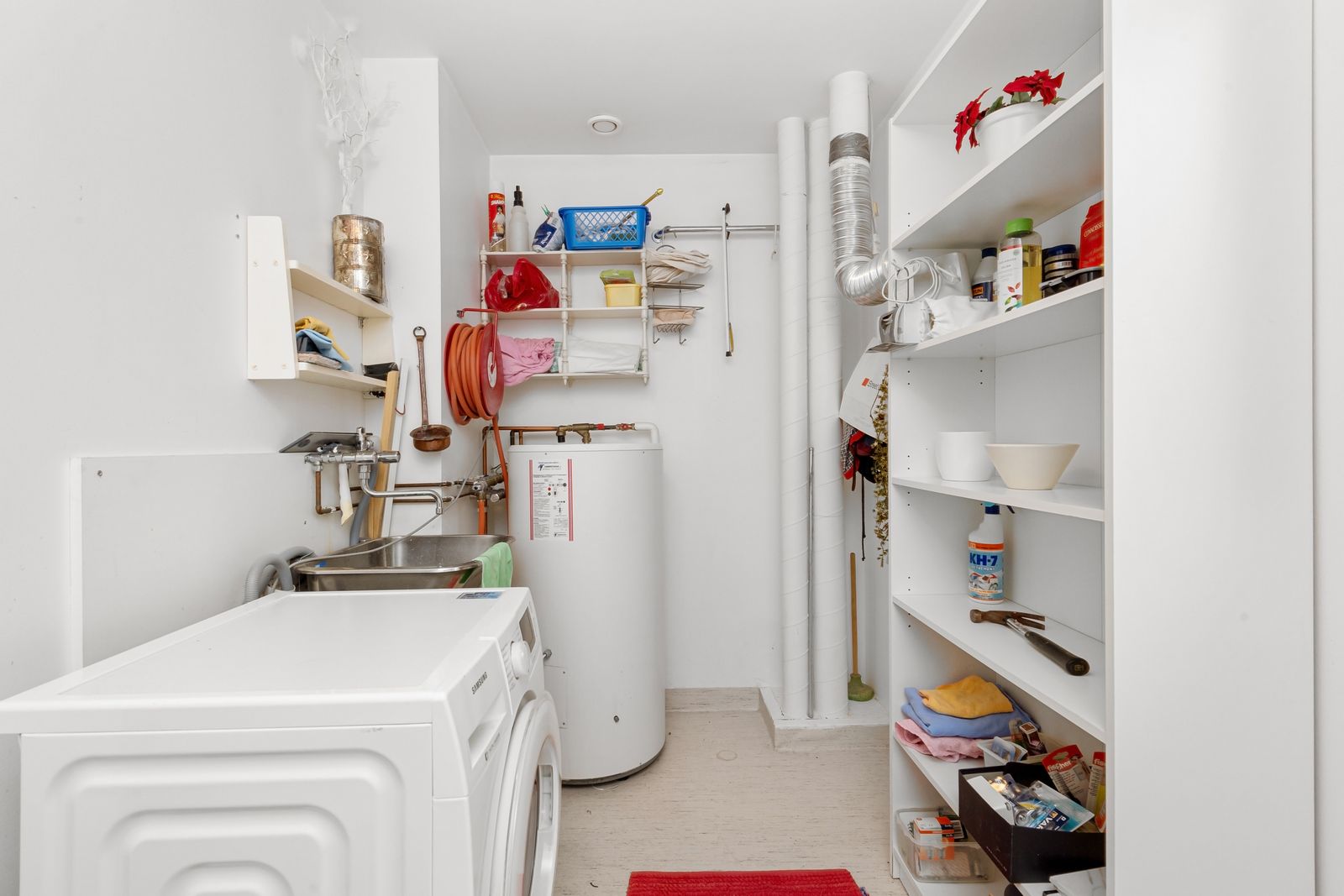
A tank water heater is easy to forget until it starts making sounds. A pop when the shower turns on, a low rumble from the basement, a tick in the pipes overhead. It's natural to wonder whether something is about to go wrong.
Usually the sound is telling you something specific and fixable. Manufacturers group water heater noises into a handful of patterns, and each one points to a different cause. Some are about minerals settling in the tank, some are about loose parts, and some have nothing to do with the tank at all. Matching the sound to the cause is the fastest way to decide whether this is a weekend maintenance task, a call to a plumber, or something to simply ignore.
This guide covers standard tank heaters. Tankless units work differently and are usually descaled rather than flushed, so follow their manual instead.
Match the sound to the likely cause
Popping or crackling while the heater runs. A. O. Smith explains this as steam bubbles forming under a layer of mineral sediment at the bottom of the tank and bursting through it, a bit like a kernel popping in a hot pan. This is the sound most closely tied to sediment, and the manufacturer's first remedy is flushing the tank.
A rolling rumble. When sediment piles up enough to interfere with how heated water rises inside the tank, the result can sound like distant thunder. Same root cause as popping, usually further along.
Ticking or clicking in the pipes near the heater. This often isn't the tank at all. A. O. Smith notes that heat-trap fittings and pipes can tick as they expand and contract during heating cycles. Annoying, but generally not a sign of sediment.
Humming or buzzing. Typically a loose part or a heating element vibrating on an electric unit. Not a water quality issue.
Banging when a faucet or appliance shuts off. That's usually water hammer, a pressure shock in the plumbing, rather than something inside the heater.
Whistling or screeching. Water squeezing through a too-small opening, such as a partly closed valve or a restricted relief valve, or worn parts. The manufacturer treats this one as a reason to get a technician involved promptly rather than wait.
Why hard water feeds the popping
Hardness is mostly dissolved calcium and magnesium. The U.S. Geological Survey notes that when hard water is heated, as it is in a home water heater, solid calcium carbonate deposits can form, and that this scale can lower the efficiency of electric water heaters and shorten equipment life.
A. O. Smith's technical bulletin on mineral build-up adds a detail that explains why the water heater in particular collects it: lime is less soluble the hotter the water gets, so heating pulls more of it out. Every heating cycle leaves a little more on the bottom of the tank or on the elements. Harder water and heavier use speed that up.
It's the same chemistry behind the chalky ring inside a kettle or coffee maker, just hidden inside a steel tank where you can only hear it.
Start with your water, not a sales tier.
A free at-the-tap test helps separate hardness, taste, odor, and installation questions before you choose equipment.
What the free test includesWhat manufacturers say about flushing
Draining and flushing the tank is the standard way to remove sediment that has already settled. Rheem and A. O. Smith both recommend flushing about once a year for most homes, and about every six months where the water is hard. Pentair's guidance is a wider range of one to three years depending on the manufacturer, water use, and hardness. Your own heater's manual is the one that counts.
The general sequence in manufacturer instructions is similar: turn off power or set a gas unit's thermostat to its pilot position, shut the cold supply, run a hose from the drain valve to a safe drain, let it empty, then briefly run cold water through until it comes out clear. The tank has to be completely refilled before power is restored, because electric elements can be damaged if they heat with no water around them. The water coming out can be hot enough to scald, so many people let it cool first or leave the job to a plumber.
A. O. Smith also suggests keeping the thermostat around 120°F, noting that it helps limit sediment buildup while keeping water comfortably hot.
When it's a plumber's job instead
Some situations are worth handing off rather than troubleshooting yourself. A. O. Smith lists noise that continues after a flush, water leaking from the tank itself, whistling or screeching, and any repair to heating elements, thermostats, gas components, or the relief valve as reasons to bring in a technician. If the drain valve won't open or close properly, that's also a good moment to stop and call.
If the heater is older and the noise has been going on for years, a plumber can also tell you whether flushing is still worthwhile or whether the scale has hardened past the point where a flush helps much.
Where a softener fits, and where it doesn't
A water softener removes calcium and magnesium before water reaches the heater. The Minnesota Department of Health lists less mineral scale inside pipes, fixtures, and hot water heaters among the main benefits of softening. In other words, it works on the cause of new sediment.
It doesn't remove sediment that's already sitting in the tank, so a flush is still the first step for a heater that's already popping. It also does nothing for ticking heat traps, water hammer, a loose element, or a worn relief valve. Those are plumbing issues, not water chemistry.
If hardness turns out to be part of the picture in your home, Softstone's single package is a softener, whole-home carbon filtration, and an under-sink reverse osmosis system for the kitchen, at a published $3,599. The pricing page lists what's included so you can compare it on your own time.
Start with how hard your water actually is
If you're on city water, your utility publishes an annual water quality report, often called a Consumer Confidence Report, and many list hardness. The USGS classifies 0 to 60 mg/L as calcium carbonate as soft, 61 to 120 as moderately hard, 121 to 180 as hard, and anything above 180 as very hard.
If you're on a private well, there's no utility report to look up, and testing your own tap is the only way to know.
Softstone Water is based in Strongsville and serves homes across Cuyahoga, Medina, Lorain, and Summit counties. A free in-home water test gives you a hardness number for your tap and a plain-English explanation of what it means for your water heater, fixtures, and appliances, with no obligation to buy anything. Call or text (330) 304-1001, or use the contact page to set one up.
Sources
- A. O. Smith: Why your water heater might be making noise
- A. O. Smith: Technical Bulletin #13, Mineral build-up
- Rheem: How often to flush your water heater
- GE Appliances: Electric water heater owner's manual (draining and flushing)
- Pentair: Hard water and cleaning your water heater
- USGS Water Science School: Hardness of Water
- Minnesota Department of Health: Home water softening FAQ
- U.S. EPA: Consumer Confidence Reports
Continue exploring
Ready for a clear answer about your water?
Book a free in-home water test. We will explain what we find, answer your questions, and let you decide.